
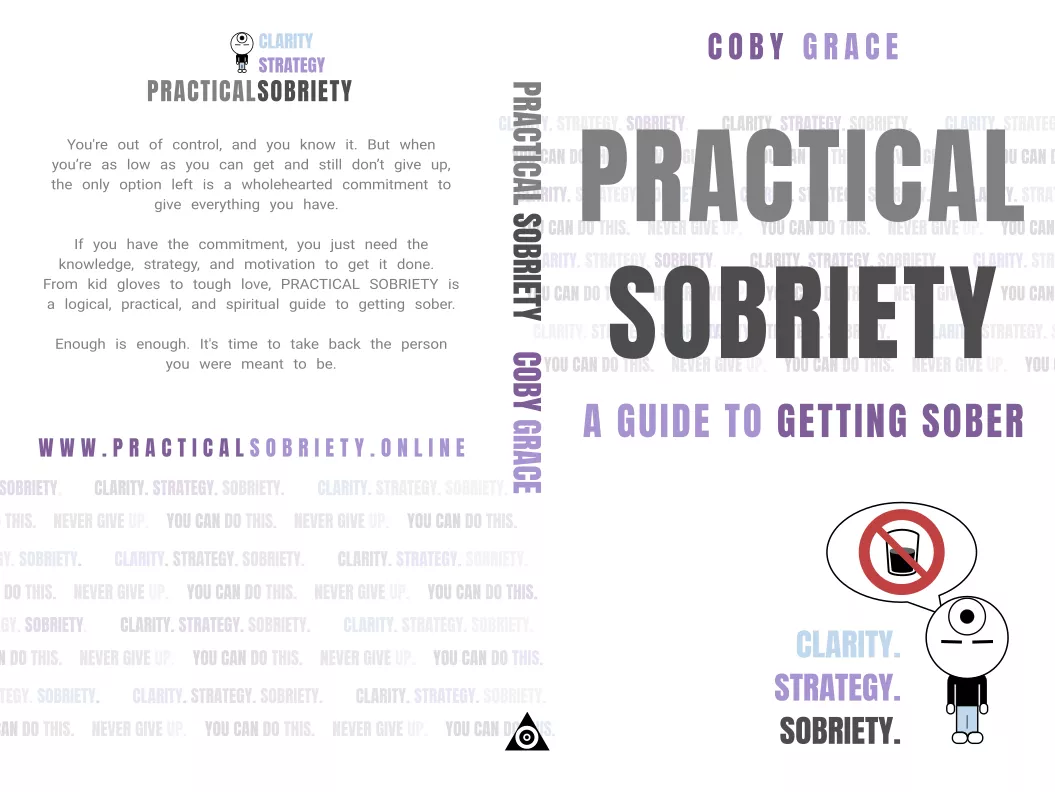
THE COMPLETE BOOK
Continue with Practical Sobriety
Move beyond Clarity into the full Strategy and Sobriety sections.
The complete book develops the conceptual foundation established in Part One, turns it into an overall recovery strategy, and then applies that strategy through the changing stages of sobriety.
It is designed to be read progressively, with the later practical chapters revisited as they become relevant.
What continues
From understanding to application
Part One explains the predicament. The complete edition continues with the strategy for addressing it and the practical framework for applying that strategy through recovery.
Each section builds on the previous one. The aim is not to provide a collection of disconnected tips, but a coherent method whose parts make sense together.
Inside the complete edition
All three parts
PART I
Clarity
Understand the addiction and recovery process, behaviour, dopamine, the higher brain and the wider personal context.
PART II
Strategy
Build an overall approach based on expectations, planning, subconscious change, dopamine, executive function and obstacles.
PART III
Sobriety
Apply the method through groundwork, early recovery, increasing stability, long-term growth and the possibility of relapse.
Before you decide
Read the complete first part free.
Part One is available online and as an EPUB sample, so you can experience the book’s tone, structure and core ideas before buying the complete edition.
Choose an edition
Buying options
Add the final retailer links once the editions are confirmed.
E-BOOK
Kindle Edition
Read the complete book on Kindle devices and apps.
Paperback Edition
A physical edition for reading, reference and returning to the practical chapters over time.
Health and safety
Use the book alongside appropriate support.
Practical Sobriety provides educational and motivational information based on personal experience and understanding. It does not replace professional diagnosis, medical advice or treatment.
Stopping or substantially reducing alcohol can be medically dangerous for some people. Seek qualified healthcare support when planning changes, particularly where dependence, withdrawal symptoms or other health concerns may be involved.