
ABOUT THIS BOOK
Practical Sobriety
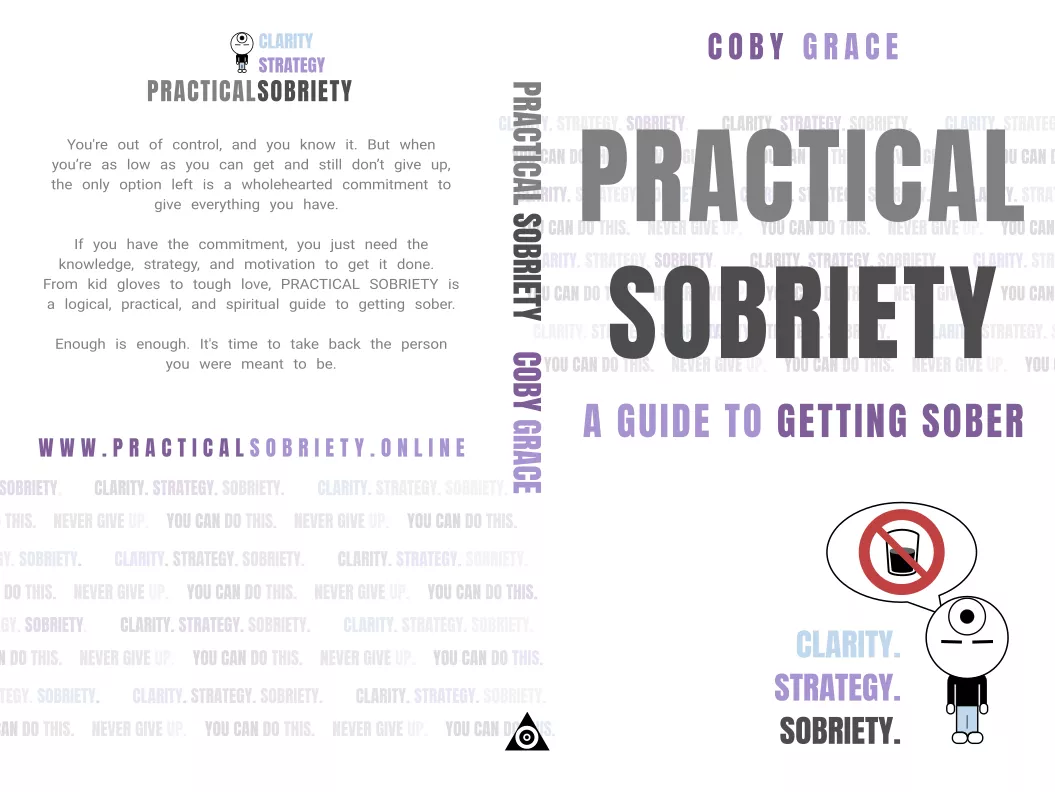
A structured guide to understanding addiction, building an effective recovery strategy, and applying it through the changing stages of sobriety.
Practical Sobriety grew from a long process of recovery, relapse, observation and adjustment.
Its central idea is simple: sobriety becomes possible when the pieces and moving parts are understood and arranged into a configuration that supports it.
The structure
Clarity. Strategy. Sobriety.
The book is arranged as a linear progression. Each part prepares the ground for the one that follows.
The opening sections are conceptual. They explain the predicament, provide a way to understand it, and establish why the later practical suggestions are structured as they are.
The final part turns that understanding into action. Its chapters can then be revisited as they become relevant during different stages of recovery.
Reading the conceptual sections first helps the practical work make sense. When you understand why something matters, you are more likely to engage with it wholeheartedly.
The three parts
One connected progression
Understand the predicament
Clarity
Clarity describes the addiction and recovery process and helps orient you within it—past, present and future.
It examines the subconscious mind, dopamine and the higher brain to explain why behaviour can feel outside conscious control.
Explore Part One →Build the overall approach
Strategy
Strategy explains the overall approach to achieving sobriety, what to expect from it, and why its different elements matter.
It turns the understanding established in Clarity into a coherent, workable plan.
Explore Part Two →Put the theory into action
Sobriety
Sobriety provides a practical framework for applying, practising and integrating the principles in everyday life.
Its guidance changes with the stages of recovery because early and long-term recovery do not present the same needs.
Explore Part Three →How to read it
Read the foundations first.
The conceptual chapters are intended to be read in full and in order. Once you reach the practical material, you can focus more closely on the chapter that matches your present stage of recovery.
You may also find yourself returning to earlier concepts. Repetition is intentional: some ideas remain relevant throughout recovery, and their meaning often becomes clearer through experience.
The visual model
The avatar
Throughout the book, a simple avatar represents three key elements: the conscious mind, the subconscious mind and the body.
The small black circle represents the conscious mind. The larger white circle represents the subconscious mind. The figure itself represents the body.
The model is deliberately simple. It provides a consistent visual way to examine which part of the system is influencing behaviour and where recovery work may need to be directed.
Read it now
Begin with Part One: Clarity
The complete first part is available to read online and will also be available as a free EPUB sample.